






Let’s be honest: one of the greatest joys of cruising is the food. Every day feels like a culinary adventure—sampling global cuisines, hopping between specialty restaurants, and piling up plates at the buffet.
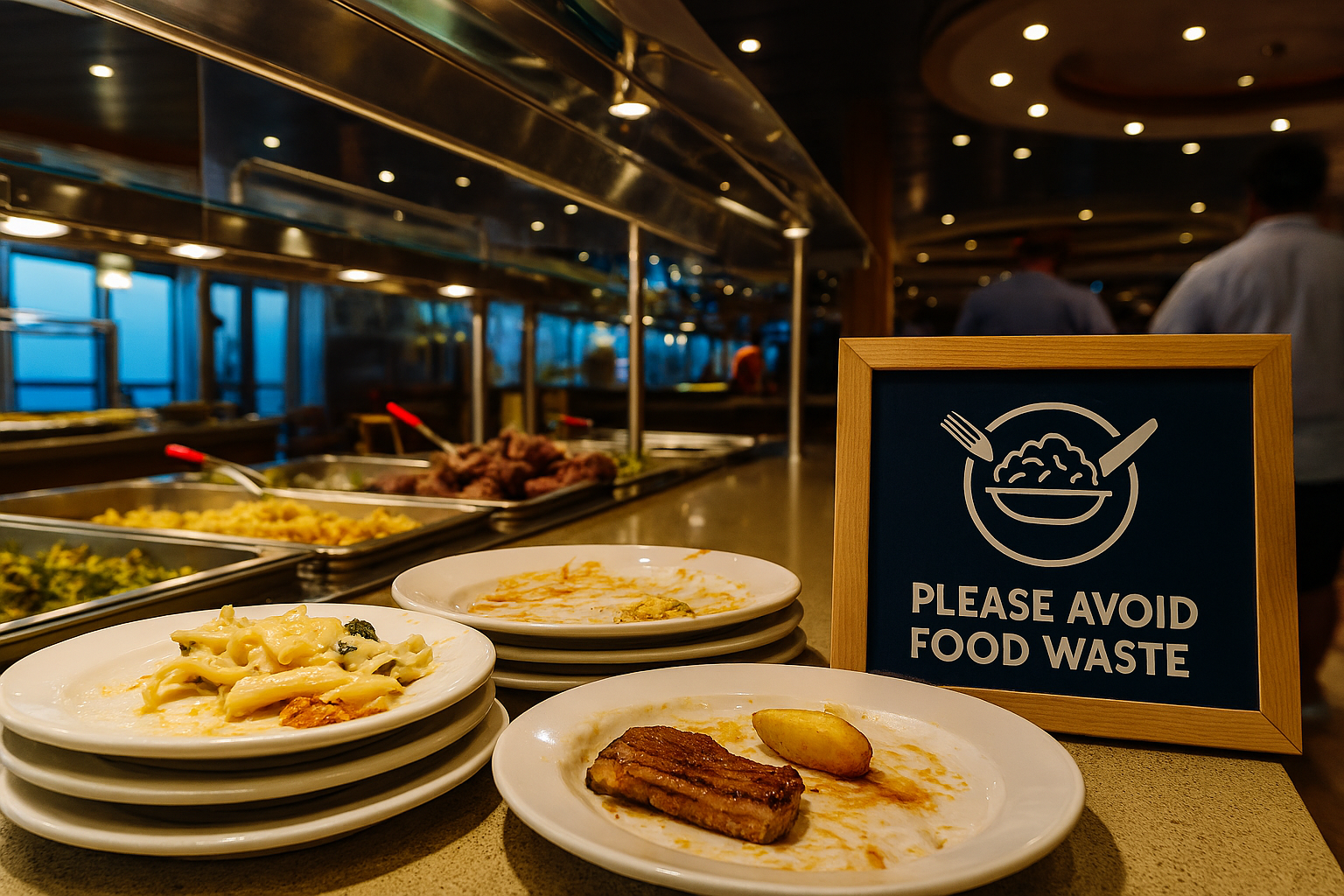
But there’s a moment that can sour the sparkle: walking past tables stacked with untouched plates, perfectly good meals abandoned. It begs the question—what happens to all that uneaten food? Do crew members sneak it away? Is it tossed overboard for fish? Burned? Donated?
The truth is far more fascinating. Behind the scenes, cruise lines juggle strict health rules, cutting-edge technology, and sustainability mandates to minimize waste and protect both people and planet.
The Reality of Leftovers
Cruise ships are designed to dazzle guests with abundance. That means kitchens often prepare more than necessary, and guests sometimes take more than they can finish.
Here’s the first myth to bust: crew members don’t feast on buffet remains. Once food has been served or set out, it must be discarded for hygiene reasons. Yesterday’s bacon or sushi tray won’t reappear in the staff dining hall.
So yes—buffet food that’s been exposed is thrown away. But that doesn’t mean it all goes to waste. Cruise lines are surprisingly sophisticated in how they manage food before it ever hits your plate.
Smart Food Management
Modern cruise lines treat food waste reduction like a science.
- Data-driven kitchens: Royal Caribbean Group uses AI to predict passenger demand, adjusting menus and prep in real time. If fewer guests are hitting the pizza station, chefs scale back production. This alone cut their food waste by 24%.
- Right-sized portions: Carnival Corporation brands aim for “just right” servings—enough to satisfy without leaving mountains of scraps, while still letting hungry guests grab seconds.
The goal? Prevent waste before it happens.
Untouched vs. Half-Eaten
Not all leftovers are equal.
- Unserved food: Historically discarded, but now some cruise lines donate untouched portions. Costa Cruises pioneered this in 2017, working with Italian food banks and the Red Cross to deliver restaurant-quality meals to families in need at every port. Carnival Corporation is expanding this model globally.
- Plate waste: Once food has been eaten or even touched, it’s considered unsafe. That half-eaten steak or pasta goes straight into the ship’s waste system.
Waste Disposal at Sea
Cruise ships operate under strict international environmental laws. Dumping food overboard is not allowed—except under tightly controlled conditions.
- Food waste can only be discharged at least 12 nautical miles from land, and only after being ground into small particles to biodegrade safely.
- Many cruise lines go further, using advanced treatment systems or waiting until they’re even farther offshore.
- In port, all waste stays onboard until it’s offloaded to licensed handlers—nothing is ever dumped near sensitive coastal areas.
The Bigger Picture
Cruise dining is about indulgence, but behind the scenes it’s also about responsibility. From AI-powered kitchens to charitable donations, ships are finding creative ways to balance abundance with sustainability.
So next time you’re at the buffet, savor the joy of choice—but maybe take just what you’ll finish. Because every plate tells a bigger story about how cruising is evolving to care for both guests and the world we sail through.


Leave a Reply